October 20, 2010
Information in Context

October 13, 2010
Feeling SMUG
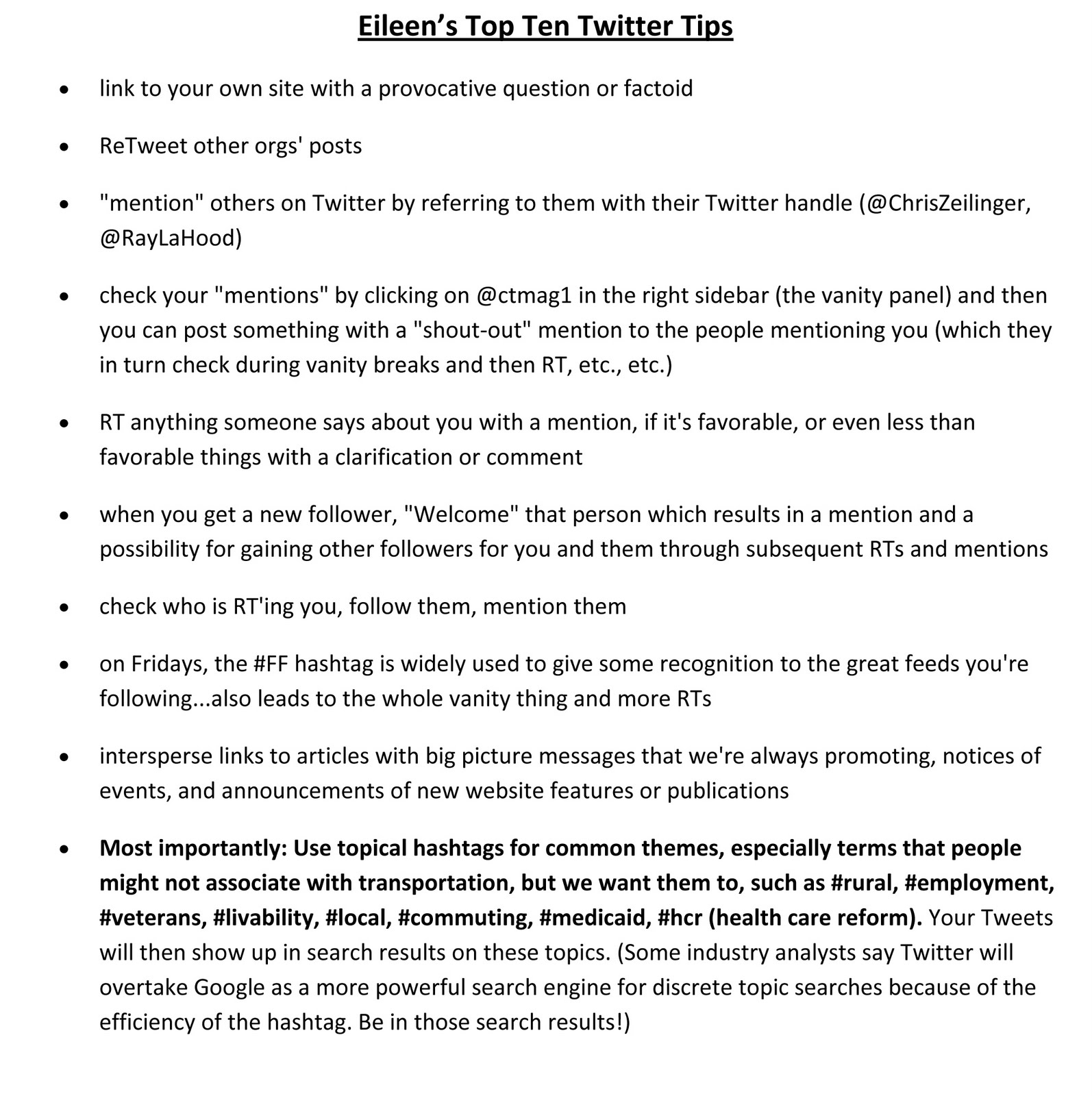
Today was the first meeting of our Social Media Users Group (SMUG). We had about eight people there out of about 14 who had been identified as using or preparing to use blogs or Twitter for official business. The meeting was structured around my colleague Kendra's wise words, "There is no exact recipe for success, but there are known ways to fail." While we enjoyed my not-so-original recipe for rainbow chip cake, we brainstormed known ways to fail, and here are some we came up with:- Tweeting without a picture, or changing the picture too often (in my opinion you should never change your Twitter picture);
- Tweeting without a bio or with a bio that is not sufficiently descriptive of what people should expect from your feed;
- The "Do-Not-Tweet" List: a need for proscriptions from above on specific content (such as ballot measures) that we are forbidden to Tweet or ReTweet;
- Using automated share tools without knowing how they work (lest you inadvertently Tweet that you are "Currently Browsing.....");
- Duplicating another program's feed;
- Proliferating or initiating negative content about a partner, sponsor, funder or federal agency;
- Using irony, sarcasm, provocative questions or ambiguous language that could be misinterpreted;
- Accidentally ReTweeting your favorite off-color comedian;
- ReTweeting a link without knowing what it leads to;
- Having an ill-defined scope or voice for your blog (or none at all);
- Having too much voice, or using an organizational blog for personal purposes;
- Duplicating everything from your website on your blog;
- Blogging negatively;
- Posting infrequently or abandoning the blog altogether.

October 6, 2010
Greatest Hits
It's time to talk about hits--great ones if you'd like--but more importantly, the kind generated by Google bots and the ones oft' overestimated by your staff as genuine human interest in your web content. Lately, everyone's favorite word seems to be "hits." I keep finding myself in meetings where someone asks breathlessly, "How many hits are we getting on that page? Have our hits gone up? Are you tracking?" If you hear one of these questions, take a deep breath, put your enlightened librarian face on, and calmly explain the following:- A 'hit' is not as easy to define as some might think. Your own web system may define it differently from services such as Google Analytics, and you may have to wade through your server logs and crunch the numbers yourself to get an accurate count. (I'd say more, but I obviously don't know any more than this; I rely on our webmaster to interpret the server logs.)
- Your own hits may be included in the numbers you are looking at. I don't know about you, but every time I am building a page, I check it several times in several browsers because I don't trust the preview screens. All those hits and refreshes (to fix apostrophes that are turning up as question mark diamonds) may be counted as veritable web traffic to a page. Which brings me to the next point...
- You need to create a baseline to make sense of the numbers. You may choose to start tracking hits or growth after a certain date to filter out some of the set-up hits, especially if the page in question is brand-new. If the page is not a brand new URL but you have changed or added content, then it becomes even more important to think carefully about the date ranges you want to look at.
- Don't track hits on pages you do nothing to promote. Marketing may not be in your job description, but if someone is asking you how a page is doing, and that page is not either (a) linked very prominently on your site, or (b) being actively promoted through some other method, do not spend time looking at the numbers until you've made some effort to drive web traffic to that page.
- Be clear on what you are looking for in the numbers. Have you ever heard that HITS stands for 'How Idiots Track Success'? (I originally heard this attributed to Gerry McGovern, and it has also been attributed to Google's Avinash Kaushik, but I'd like to think it was first coined by Toby Ward.) I don't know if I truly believe that, but I think the extreme point of view occasionally helps move us to a more reasoned middle ground. Yes, you want to know if people are using your site, but hits could be bots not people, and even if the hitmakers are human, do you know how satisfied they were with your content? As JD Roth says, "Do you know the best way to get search engine traffic? Get linked from other sites. Do you know the best way to get linked from other sites? Write content that people want to share with others, content that makes people go, “Wow. I’m glad I found that.” That’s only SEO trick you need to know."
September 29, 2010
Day in the Life: The Three Most Important Things I Learned in Library School
- HTML: Thank you, Bill Kules, for making me learn to code in HTML by hand and not use Dreamweaver! I use this skill every day in this job. And the importance of this goes well beyond just being able to help out with web tasks in a small organization. When you know code, you have a better understanding of how to organize information. It expands your imagination on all projects. Our content management system can automate a lot of things, but if you can get in there and mess with the code (or even be able to look at code without recoiling in fear), you can be a resource to your webmaster and everyone else.
- Web Accessibility: I cannot tell you how important it is that as a librarian you know a thing or three about how to make your electronic information accessible to people with cognitive, visual, or other disabilities. It is the perfect marriage between the person-centered approach of libraries, and the technical knowledge and skills that are increasingly important to our profession. If you are the only one in your organization singing this song, SING LOUDER.
- Copyright: Embrace your duty to educate your staff about their own "copy rights," and speak up if you feel they are infringing on others' rights. Your organization may routinely give its resources away for free and without a vested interest in getting credit. However, you as the librarian, and I as the librarian, and we as librarians, have to work extra hard to communicate that not everyone feels this way about sharing information. When I was in Copyright Camp during library school, the SIIA's message to me was, "Don't copy that floppy!" I feel I am slowly making a mantra out of "Don't post that PDF!" Make your staff aware that you have copyright knowledge, and if you don't have some, make a list of your questions and ask another librarian.
September 22, 2010
Advising Work Teams on Blog Projects
I noticed that I have been advising teams on blogging a lot lately, and in listening to myself talk, I decided that I know, or think I know, something about this, so here goes... If you are asked to weigh in (or, perhaps, even if you're not), here are some talking points to guide a content team toward better blog decision-making.September 15, 2010
Help Yourself
I usually write about my successes. I need to learn to write more about my challenges, but without complaining.
September 8, 2010
To Do, Ta-Da, and Everything In Between
One of the quotes in my Embedded Wisdom list (see sidebar) is, "You cannot break the law; you can only break yourself against the law," and if you follow me in any way shape or form, you hear this over and over again. You hear me stumble through how it relates to my new tattoo design, why it's the middle epigraph in my novel, and why I insist on bringing it up over and over. I have not yet found a way to articulate it for best effect, but I've transcended ever questioning whether it is the most important bit of wisdom I have ever heard or read. In a nutshell, some ideas keep falling into your path or getting in your way over and over again until you recognize them.Here is one for you: Make a To-Do List. When I try to come up with something for the Task Mastery 101 sidebar, it usually ends up being about To-Do Lists. Sometimes I hesitate to post those tips because, really, what could be more of a snooze than having someone recommend that you make a list of the things that you'd like to accomplish? But over and over again I find that it often is just that simple. Here are a few reasons I decided this was post-worthy:
- The act of making the list organizes my random thoughts into discrete tasks;
- The act of making the list facilitates prioritization and decision-making; and
- The act of making the list moves me from inaction to action.
Last year on the Solos list-serve someone posted a great document of what she does daily/weekly/monthly/annually in her library and it was quite detailed. Parts of that could become an intern's project description, or the scope of work for a contractor, or a part of your professional portfolio. It becomes the documentation for you and everyone else of how you spent your time, and how much time things take.
September 1, 2010
C.U.R.T.?

I had a great teacher in library school who encouraged his students to approach Wikipedia as a "fact of life" and not an inherently bad thing, just one that librarians should use with more thoughtfulness and caution than the average user might. I feel the same way about acronyms: they are there for a reason and they can make our life easier. Nevertheless, acronyms pose obvious problems to new staff at an organization, visitors to your meetings and conferences, and even you if you don't know what they mean.
The first rule of acronyms: Ask. If you hear one in a meeting, write it in the margin of your notes and ask what it means at the first appropriate opportunity, which may be right away if it's crucial to your understanding of a task. It may be the case that you figure it out from context and double-check it after a meeting, or follow up with the person who used it.
The second rule of acronyms: Keep a list. The librarian is a key person to document miscellaneous knowledge in an organization, and making an acronyms list is a great way to start. This list will have 101 uses. Make it available via your intranet (or via a public web page if appropriate) and have a way for people to suggest or add changes. Offer it to conference organizers to include in the program if guests from outside your knowledge speciality are attending. Include it, or a relevant portion of it, in your organization's standard publications.

Think about how you feel when you get a very short email from someone without a lot of context or elaboration (especially in customer service situations) as opposed to a thorough explanation. The longer explanation usually adds to your understanding, makes you feel valued, and shows that the person on the other end gave some thought to your point of view. The same is true for acronyms. Avoid seeming curt or exclusive by giving everyone who interacts with your organization an opportunity to be "in the know" and figure out what people are saying.
August 25, 2010
Notarizing in the White Spaces
Two years ago I became a Notary Public in the District of Columbia. While my husband chided that becoming a notary is "what nerds do when they grow up," I contended that this was a natural extension of my role as a steward of authenticated information.As the District's Notary handbook attests, the role has evolved from that of designated notetaker to one "certifying the truth" by witnessing signatures on important documents. I knew that my organization often had a need for this service, and I correctly predicted that becoming qualified to fulfill this role would help me get to know my coworkers. It's a public service you can provide that fits well with other solo/embedded duties as part of working in the 'white spaces of the organizational chart.'
You may find that a member of your finance staff is already a Notary Public, but often the documents that need to be notarized are financial in nature and so a third, disinterested party is necessary to witness signatures. I've also been pleasantly surprised by all the non-work/personal business I have received in my office, now that people know I am a Notary Public. I have probably notarized documents for half our staff and only half of those were work documents. It's been a great way to get to know people, and for them to get to know me. (I have the "Notary Public" nameplate on my desk so people know when they walk by that I can provide this service.)
Requirements vary state to state, but you will likely have to go through some level of training, provide references, get bonded, and buy your stamp(s) before you register with your state and take your oath. And, yes, you will be offered many additional customized products when you buy your stamp. But, yes, you can write off your set-up expenses on your taxes, as well as any income you make as a Notary Public (in fact, you have to declare that). While this is not a huge money-making enterprise, it's a nice complement to other skills, talents and certifications that librarians naturally have, and it's a great way to enhance your visibility in the workplace. It could be the starting point for long-term work relationships, and when people see you as a competent and trustworthy agent of the state, they tend to think of you as a resource for other matters. It's also a great way to learn about local and state laws, legal documents, and other procedures handled by state government.
Although I moved to Maryland after starting my commission as a DC notary, my employer wrote a letter on my behalf to the Office of Notary Commissions and Authentications so I could continue notarizing in DC until my commission expires in 2013, noting that this was a valued service I provide to the organization.
August 18, 2010
Works in Progress
Thing 1: For one of the teams I am "embedded" with I am drafting a training on "information overload," which I am modeling around Clay Shirky's idea that, "It's not information overload; it's filter failure." I am having a lot of fun with it. This was requested for a set of part-time independent contractors who work on our behalf in the field and receive tons of electronic information from our staff, in addition to memoranda from the project director.
I was asked to craft this presentation with the goal of explaining all our electronic messaging and how these contractors can strategically use it to help and not hinder their work. I am focusing the presentation around the topics of "Filtering" and "Filters," explaining the general approach and then the tools. I want to build on the idea that we are all already using some filters whether we know it or not, but the filters sometimes have to be adjusted for the specific types of information in our intake, that being the information I am to be the "specialist" on.
Thing 2: For another team I am "embedded" with, I am helping them draft what I am calling an "Overall Information Strategy" as part of a website relaunch and renewed marketing plan. It's not supposed to be a communications plan so much as a prerequisite for a communications plan--first documenting all the information sources and then outlining the appropriate outreach that matches each (and by "outreach" I mean to include internal staff communication).
To do this, I am first documenting the OIS for the team in Thing 1 (my primary project), and it has been just as much fun as the Information Overload presentation. These are both going to be tools I reuse and refine again and again.To start the OIS document, I just made a matrix showing all the types of information that come in on one axis, and all the possible actions and dissemination outlets on the other axis. And yes, there is strategic overlap: creating a new web page could be either the cause or the result of one of the other actions, and a new publication, if it's ours, would probably have dots filled in across the board.
August 11, 2010
31 Flavorful Months of del.icio.us
It's been 31 months since Gretchen introduced me to social bookmarking through del.icio.us (now, officially, "Delicious"). Aside from Google Alerts, this is the most important free tool that I use to organize my work. I consider my Delicious toolbar to be another appendage: I need it and use it all the time, and I usually only stop to appreciate it if it's impaired in some way.When you get really good at tagging it can be seamlessly integrated in your work and can increase your speed and efficiency considerably, all the while creating a nice metadata record of the parts of your daily web traffic that have either caught or demanded your attention. It also acts as a great search engine later for an addled brain that remembers seeing "something" on a certain topic but then forgot about it. (When I was in library school and I would forget where I read something, I used to just ask Gretchen about those info-wisps. She seemed to have an almost clairvoyant sense of my own brain's organization and could usually figure out what I was talking about.) Nowadays, if I spend any time at all on a site, I tag it.
One of the things I like about how it works, or rather, how my work behavior has evolved since I've been using Delicious, is that having tagging fully-integrated with all my online behavior helps me know in a passive, low-effort way what the hot topics have been. Then when someone asks what theme we should focus the next newsletter on, I can contribute meaningfully by saying something like, "Gee, there seem to be a lot of things going on right now with women in transportation." It has also been very interesting to see my tags develop as new topics shape our field. My bookmarks for ARRA, livability, and Mobility Management have grown steadily as our projects and work plans have developed over the past year.
Since I asserted in a recent post that one of my guiding principles is not to complain, I will try to frame my Delicious Dilemmas as questions rather than gripes. One of the things I wish I could do is bundle tags so that, for example, if I tag something "Rogoff" it automatically gets tagged "FTA" as well (but not vice-versa, or this would be a true redundancy...I just want to reflect subset-superset relationships). Is there a way to do that? I have finally learned how to search for tags within tags, but I would also like to have some kind of option to apply them that way, which I realize would require a lot of concentrated set-up time. (Or to search by what the first tag was that I used...yes, I know, this is starting to sound like a love song for actual taxonomies.)
I also wish you could bundle tags to apply to more than one resource while you have all those related windows open. For example, sometimes I follow a story or an issue and I have several windows open that I want to tag with the same ten terms, usually when I am doing research for a staff member and I do administrative as well as topical tags. Is there a way to do this? As a short-term work-around I have adopted a simple copy-and-paste method through Notepad so I can insert a string of terms in the Tags field as soon as the Save-a-Bookmark window opens.
I love my tag cloud. It's the best portrait of what I've been looking at and working on, and it's a good reflection of the strange slice of the transportation world that I am charged with researching. It also reflects the idiosyncrasies of how I think in this place, and how our vocabulary might diverge from a traditional controlled vocabulary. “Recommendations” means something like a GAO report or a policy proposal, whereas “Recommended” is my shorthand for all those links my boss sends me that I deem important but not urgent. Also, I am finally in the habit of using my "Ready Reference" tag for all those publications our staff quote all the time, have taken pains to post in strategic places on our website, but occasionally want to see links to all in one place.
My bookmarking is only marginally "social" although I am starting to use it in that direction, and now that I am very familiar with the "back end" I think I am ready to do more sharing of the "front end" with staff so they can find things they know I have without having to go through me if they don't want to. I have not experimented with Digg or Stumble Upon but maybe I will. (But I have a feeling that that comparison may lead to breaking, or at least bending, my 'Don't complain' principle.)
August 4, 2010
Transferable Skills Part 2: Getting to Know Your Government, or "A Librarian's Love Affair with the Government Accountability Office"
One of the best parts of this job is getting to know how our government works, and in particular how it works with non-profits.My employer is a non-profit membership association, a 501(c)(3) operating on members' dues, conference and training revenues, publications income, and some federal funds. The federal monies are harder to understand and this requires several lessons in government I haven't completed yet, although I have begun my study. Some of the federal funding comes through earmarks, one of those words, like lobbyist, that some think connote waste or inappropriate spending until you find out all the different things they pay for and then you realize that the terms are just neutral: all kinds of groups and projects, including libraries and librarians, could be funded this way.
I have also heard a thing or three about "appropriations" and "authorizations" when it comes to how some of our projects are funded, and sometimes it depends on whether the project is funded by DOT, DOL, HHS or USDA. This part is a bit trickier and I won’t pretend I understand it yet.
Then there is the much beloved set of terms that describes the contractual relationship our association has with a given federal agency for a given project. This could be a “grant,” or a "contract" or a "cooperative agreement" or other type of relationship. Knowing the quirks of all these arrangements gives me great insight into how other projects run in Washington. Yes, it's all much more complex than I could have imagined growing up in the Midwest when the White House seemed like a strange majestic icon. Now that I work two blocks from it, and realize how much smaller it is than my office building, I have a much different perspective about what goes on there, at the other end of the Mall, and in all these buildings in between.
One great resource I have used to educate myself about the actual workings of government as they affect our association's work is the Government Accountability Office (GAO) and its stellar report services. Each week I get a handful of alerts of GAO reports, legal decisions and testimony before Congressional subcommittees. These resources cover topics I have chosen through the GAO alert service (transportation, education, and information management, to name three). I also get a Month-in-Review email that I pore over to find any great pubs I may have missed.
Geek alert: I love reading GAO reports. This is great writing, folks. And it's not mystery writing: the report titles tell you exactly what the upshot of the report is, the highlights pages (always first after the title) are clear, consistent and readable, and these reports are expertly edited, formatted and abstracted (bonus!). They make reference to fantastic federal resources such as the National Youth in Transition Database, and each report comes with a list of relevant acronyms.In addition to learning the actual subject matter of a particular report, you get to know how government accountability works in general and you begin to intuit what other processes and entities have been investigated so the GAO reports database becomes a go-to resource for many topics. You will find yourself thinking, "The GAO probably did a report on that; I will look it up and track it down."
The GAO site announced last week that it has gone mobile. This means I can spend even more of my free time reading reports like my July selection (which I did finish!), and this great one selected as my August must-read GAO report. I once posted a GAO report to my old apartment building's list-serve (about some topic that was pressing in our community at the time) and my neighbor said, "I work for the GAO and I know how much goes into those reports. I am so glad somebody actually reads them!" Well, I am so glad somebody actually writes them.
July 28, 2010
The Events Calendar is a Collection.
As part of my other duties as assigned I manage an events calendar. It's easy to think of this as just another administrative duty that falls in line somewhere near the name tents, although requiring slightly more advanced computer skills (it runs as a database in our content management system, WebArticles, and appears in three different sites' customized style wrappers). Actually, though, the events calendar is another collection of information deserving of some concentrated attention, planning, and library skills.The events I collect and post may be webinars, conferences, legislative rallies, colloquia, meetings, calls for papers, and other items of interest to our staff, members, partners, and the general public visiting our site(s). Managing this calendar has not always been my responsibility but I have taken it on with a perspective of collection development. I mine all incoming publications--print and electronic--for events that could fit the scope of our calendar. I am selective, as I would be with keeping and promoting publications. I am consistent, in terms of how I make decisions about the scope of events that would be appropriate. (We do not, for example, post all things transportation.) I also try to be consistent in how I present the information so that the metadata, as it were, for each event is displayed the same way for each event. This includes the sponsoring organization, date, location, link to registration, and any publications that participants are encouraged to review in advance of the event.
July 21, 2010
Balance
I don't require much in the way of specialized or expensive office supplies but I'm a big fan of plastic sheet protectors. My "ready reference" library on my desk consists of about fifteen pieces of paper that I regularly refer to, each in its own plastic sheet protector, and lovingly housed in a magazine holder within my reach. There I have a list of webpage IDs for content I frequently update, a page of Microsoft Office Keyboard Shortcuts, timesheet and other internal billing codes, contact information for other members of the Eastern Transportation Knowledge Network (when in doubt, ask another librarian!), and a copy of my job description. I also have an article from last summer's Information Outlook entitled "What's in a Name?" by Mumtaz A. Anwar.Although I opposed the proposed name change to Association of Strategic Knowledge Professionals, I held onto this article about professional identity because it contains a passage that I like to read often enough to warrant this document's close proximity to those other plastic-protected items: "I am supposed to possess the necessary knowledge, skills and attitudes to identify, evaluate, select, acquire, organize, maintain and disseminate relevant information for the use of my clients."
I think about this a lot when I need to refocus on what I am supposed to be doing with my day, my career, or just a free hour. That passage helps guide me back into the white spaces, where I long to act as a strategic knowledge professional, and very often I succeed. (This week the main project I work on published a paper I wrote about search mythology in our content specialty.) But the fact of the matter is that I am still a librarian with a sense of some of the mundane tasks that will keep the library alive and well.
No one who has met me would say I am anything short of an idealist, but when I read that passage I also have to remember that I was hired to do a specific job that is not in the white spaces, which has among its listed duties such things as "Receiving, responding and maintaining records on telephone and email inquiries on diverse topics of public and community-based transportation issues." I sometimes neglect the more quotidienne and less glamorous aspects of my work as I venture out into the choose-your-own-adventure aspects of it. (I even suffer from regular angst every time I am asked to make a name tent.)
I think we need to learn to carefully balance the regular duties our employers expect us to do with the more exotic ventures, and I don't think this is easy by any means. If we spend all our time in the white spaces we overlook some of our most important duties (no, not the name tents, but perhaps some of that record-keeping). I recently read something that said you cannot achieve balance in the short-term but only over the long haul. I think it's coming, and blogging alternately about tools and tenets surely helps keep me grounded in both Dr. Anwar's vision and my job description as written. Maybe the next step is to get all of those little tasks automated to the point where my job description could be rewritten!
July 14, 2010
Why I Blog
This post, like many others, has been brewing in my head (and on several scraps of electronic paper) for a while, and seeing that one of my favorite bloggers posted a "My Life as a Blogger" entry recently was just the motivation I needed to finally put this together.Last night I kept mentioning my blog while addressing a group of library school students at my alma mater. There was a time when I wouldn't have done that, for fear of what someone would find here. There was even a time when I deleted the whole thing (after creating copious archive files of everything from the entry links to the ‘DC Speak’ list), but Blogger must be used to people doing that and then changing their minds because reactivating it months later was frighteningly easy.
Part of my trepidation in keeping it going is that when I started, I felt certain that my position was an "embedded librarian" position, and before I determined that maybe it's not, I snatched up this blog address as well as the matching username in del.icio.us. So I am always a little embarrassed about the blog address and the questions it invites. Furthermore, there are lingering suspicions in my mind along the lines of what one of JD Roth’s friends said in the linked entry above:
- "Weblogs are narcissistic.
- Weblogs make a mess of Google’s search results.
- Bloggers present a biased view of their world." (original post)
This is truly a self-centered activity, but centering is inherently good, and no one is going to do it for me. Therefore, look at your blog as “self-centered” in the best possible use of the phrase. Blogging helps me figure out what I have been working on, how to synthesize it into a decent piece of writing, how to explain it to readers outside my content area, and what it means for the field. As for it making a mess of search results, well there are ways to control for that but more importantly, if you wanted to learn about solo librarianship, wouldn’t you like to read some solo librarians’ blogs? And as for the third objection, if I have a biased view of my world, it is there whether or not I blog about it. Blogging is an opportunity to identify the elements of that worldview that may be inhibiting my work, and inviting comments is a way to seek candid contributions from others.
Keeping this blog going is also a way to take a weekly deep breath about my job and figure out where I’ve been and where I’m headed, especially if I have time to go back over some of the old entries. Maybe I will discover that I have encountered the same challenges before and remember how I resolved them. Maybe I will find renewed motivation, or at least scratch my head and wonder why I sounded so hopeful in all those early entries. Maybe I will dust off my librarian adventurer boots and jump in anew and refreshed.
As for how to do it, here are my guiding principles:
- Imagine an audience.
- Put some thought into it.
- Don't complain.
- Read other blogs and learn from them.